
API Penetration Testing
Secure your application with expert API testing, API penetration testing, and API security tests. Our penetration testing and API security assessment services safeguard your APIs from emerging threats.
What We Do
APIs are the backbone of your application, enabling communication between internal and external systems. A dedicated API testing and API penetration testing team ensures these critical connections remain secure by identifying vulnerabilities, probing for weaknesses, and reporting potential flaws through a comprehensive api security assessment.
Unlike approaches that rely solely on automated scanners, this methodology goes deeper. Security experts apply advanced penetration testing and ethical hacking techniques to uncover hidden threats, making it a formidable defense against malicious actors. Additionally, personalized sessions with development teams provide guidance on mitigation strategies, while tailored API security tests are conducted to strengthen the overall API security posture.

Trusted By






Api Penetration Testing As a Service
Standardtouch has collaborated with a wide range of industries, including Airlines, Supply Chains, Fintech, Health-tech, and E-commerce, gaining deep insight into various application environments. Effective penetration testing brings the most value when the team conducting API penetration testing has a solid understanding of the application’s business logic. To achieve this, a dedicated API testing team focuses on thoroughly analyzing the application’s architecture and logic flow. This approach ensures that every API security assessment and API security test is precisely aligned with the unique structure and behavior of your APIs, enabling the identification of complex vulnerabilities that automated tools often miss.
API VAPT
This specialized team is now available to deliver end-to-end API penetration testing, supported by advanced, industry-standard tools and methodologies. Through detailed API security assessments, precise API security tests, and deep manual penetration testing, every layer of your application is thoroughly analyzed. These API security assessments help ensure robust protection against both current and emerging threats.

Assess
Penetration testers perform a comprehensive analysis of your applications and APIs, applying attacker-like methodologies to uncover vulnerabilities—including zero-day threats. Leveraging industry standards such as the OWASP Web Security Testing Guide and the SANS Application Security Standard, detailed, manual security assessments and API security assessment are delivered that go far beyond the limitations of automated vulnerability scanners.
Standards
Industry-standard tools and global best practices are leveraged to identify every security vulnerability through comprehensive penetration testing. Each API penetration testing and API security assessment project is approached using the same advanced techniques and tools as real-world attackers to uncover emerging threats. Compliance with leading frameworks such as NIST, OWASP, and SANS is ensured, while certified security engineers—holding credentials like CREST, CEH, and OSCP—deliver in-depth API testing and tailored API security assessments to protect digital infrastructure.
Transform
Get penetration testing and API security assessment reports written in clear, developer-friendly language that’s easy to implement. Unlike typical reports that leave vulnerabilities unaddressed, detailed guidance is provided for fixing issues. Additionally, one-on-one sessions with security experts are available for developers, along with vulnerability remediation support for up to a year after testing through Oncall Advice.
Benefits for all Security Stakeholders
Chief Information Security Office and Security Team
Proactively identify and mitigate risks, meet compliance requirements faster, and improve application delivery agility. This approach enhances collaboration with development teams, reduces testing costs, and ensures no compromise on quality. With greater control over testing programs, faster turnarounds, early detection and resolution of issues, and continuous monitoring, organizations are empowered to stay secure and agile.
Chief Technology Officer & Product Development Team
Ensure early detection and remediation of security vulnerabilities, enhanced network security, and a risk-based approach to server management. This process fosters seamless collaboration with security testing teams, delivers quick turnarounds, and leverages advanced analytics. Instead of static PDF reports, live sessions, detailed documentation, and comprehensive vulnerability lifecycle tracking are provided to support the product development journey.
Chief Executive Office & Business Management
Achieve cost-effective compliance in a rapidly evolving regulatory environment while safeguarding brand reputation. These solutions offer predictable costs, transparent billing, and reduced administrative overhead, ensuring seamless business management.
Services
What do we check for when we conduct API security testing?
OWASP API Top 10
Examine APIs for the most common vulnerabilities.
We're Universal
Test for all types of APIs such as GraphQL, SOAP, RPC, REST etc
Load Testing
Goes above and beyond everything security, testing the flexibility of the API servers to ensure they are secure in their truest form.
Business Logic Vulnerabilities
Design and implementation faults in an application that enable an attacker to induce undesired behavior in an application
Updates and CVEs
Design and implementation faults in an application that enable an attacker to induce undesired behavior in an application
Source Code Review
Perform secure code reviews, both automated and manual, to discover security flaws in the application code.
Check for internal integrity
By implementing the appropriate data validation and error checking, you can ensure that sensitive data is never miscategorized or stored incorrectly
PII Disclosure
Information that can be revealed using factors that can be used to reliably identify a single surveyed individual, either on their own or in combination with additional variables.
Our API testing examines flaws in the back-end services that the app relies on, in addition to identifying vulnerabilities within the app itself. During API penetration testing, we ensure that all components of the app are thoroughly covered by focusing on both the app and its back-end services.
To uncover hard-to-find vulnerabilities, we utilize advanced techniques such as reverse engineering, binary, and file-level analysis, which go far beyond a standard penetration testing approach or typical API security tests. This comprehensive method ensures that every aspect of your application’s security is rigorously evaluated through a detailed API security assessment.
These security testing activities may include but are not limited to:
These security testing activities may include but are not limited to:
Threat Modelling
Detailed threat profiling identifies potential vulnerabilities, risks, and threats specific to the application. This targeted approach enables testers to develop tailored test plans that simulate real-world attacks, uncovering genuine risks rather than the generic issues often flagged by automated scans. The result is more accurate outcomes and the elimination of false positives
Application Mapping
The application’s structure is analyzed and aligned with the threat profile to uncover potential vulnerabilities. Key parameters include keychains, brute-force attacks, parameter tampering, malicious inputs, session IDs with time lockouts, error handling, and log access control. This comprehensive mapping ensures no critical aspect is overlooked.
Client-Side Risks
Focus is placed on critical areas such as interactions with local storage, encryption practices, use of vulnerable modules, and insecure API calls during client-side attack simulations. By implementing robust access controls, these risks can be effectively identified and mitigated, ensuring a secure user experience.
Network-Side Risks
Network-layer attacks are simulated to identify vulnerabilities in communication channels. By capturing network traffic and assessing transport-layer protection, data security is ensured as it travels between the application and servers
Server-Side Risks
Simulated attacks are performed on back-end components such as web services and APIs to identify vulnerabilities, ensuring the web application remains secure and resilient.
Database Risks
Back-end systems, including microservices, data storage, caching, and memory usage, are assessed. The focus is on ensuring secure encryption for sensitive data, such as authentication credentials and personally identifiable information, to protect the application against potential database vulnerabilities.
Steps Involved in API Pen Testing
01
Information Gathering
02
Information Analysis
03
Vulnarability Detection
04
Penetration Testing
05
Privilege Escalation
06
Result Analysis
07
Reporting
08
Security Briefing Workshop
09
Mitigation Support
10
Complimentary Retesting
11
Summary Report
Explore API Pentesting Strategy
The API penetration testing service uses an advanced and comprehensive API testing methodology to uncover critical issues, exposure points, and business logic flaws within applications. Through a combination of automated and manual API security tests, this process identifies vulnerabilities, eliminates false positives, and thoroughly evaluates application security using source-code-assisted penetration testing, revealing a broader range of vulnerabilities and exposures through a detailed API security assessment.
Applications undergo evaluation early in the project phase. In the next phase, results from automated vulnerability scans are manually verified, followed by the identification and exploitation of implementation errors and business logic vulnerabilities using proven API penetration testing strategies.
Steps Involved in API Pen Testing
Detailed Report
The Standardtouch Pen Test report outlines the specific vulnerabilities identified on the platform, detailing how they were discovered, the methodologies and tools used, and any visual proof gathered. The report includes a risk rating for each security vulnerability, providing valuable reference for future actions. Additionally, it offers clear recommendations for remediation and step-by-step instructions on how to address these issues.
1:1 Workshop
Static PDF reports are often insufficient because vulnerabilities may not be addressed promptly. To ensure effective resolution, we provide a one-on-one workshop and security debrief between the security team and developers. This session covers critical and high-level vulnerabilities, offering guidance on remediation, countermeasures, and best practices to prevent future issues. If needed, the debriefing can be conducted in person for better clarity and collaboration.
Retesting
Free retest is provided to verify that the remedial actions were effective and properly implemented. After applying all relevant updates, the system ensures that the identified vulnerabilities are fixed without introducing new issues.
Secure Badge
A complimentary retesting service is offered after the customer implements the recommended corrective actions. A summary report is provided upon project completion, confirming that the necessary remediation measures have been applied. Additionally, a service is available that alerts the customer to new vulnerabilities for up to a year, provided the solution meets satisfactory standards.
1:1 Advice On-call
Advice and assistance are available for up to a year after the final report is filed, addressing any questions regarding the implementation of recommendations. This support is provided through developer-friendly channels such as phone, email, Zoom, Meet, Slack, Jira, and Teams.

Why choose Standardtouch API Security testing program
Our Technology Expertise

Apache JMeter

Postman

SoapUI

Nesses

Burp Suite
Enhancing Saudi Arabia's industry growth with expert API Penetration Testing Service to improve digital presence and performance.
From healthcare to finance, retail to technology, StandardTouch, a leading API Penetration Testing company in Saudi Arabia (KSA), provides essential tools and expertise to drive growth and innovation across various industries.
Startups
Oil & gas
Healthcare life science
Real estate & construction
Logistics
Banking financial services & insurance
Information technology
eCommerce
Education
Marketing & advertising
Manufacturing
Retail
API Penetration Testing Company in Saudi Arabia
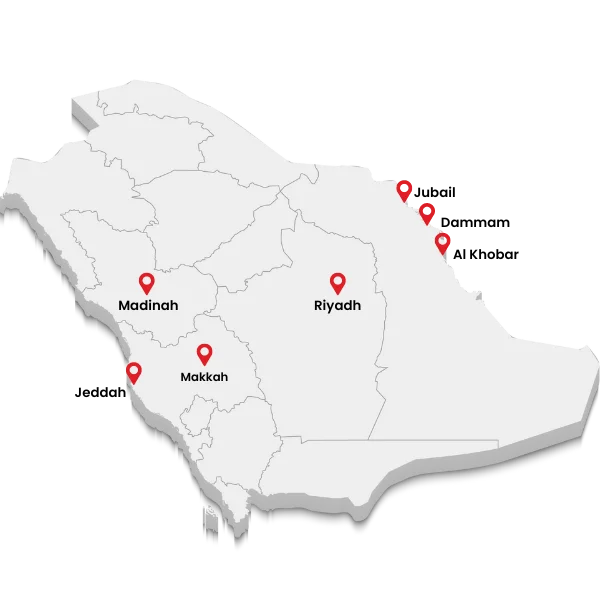
Explore top API Penetration Testing services in Saudi Arabia with StandardTouch. Serving Jeddah, Makkah, Madina, Riyadh, Al Khobar, Dammam, and Jubail, our expert team delivers tailored Web Development solutions. As a API Penetration Testing company in Saudi Arabia (KSA), we ensure seamless integration and efficient management to boost your business. Elevate your digital infrastructure with our innovative Web Development services for unmatched growth across Saudi Arabia.
Why choose Standardtouch API Security testing program
Trustindex verifies that the original source of the review is Google. Posted on GoogleTrustindex verifies that the original source of the review is Google. One of the best, one stop IT solution company! Most professional and motivated team.Posted on GoogleTrustindex verifies that the original source of the review is Google. Posted on GoogleTrustindex verifies that the original source of the review is Google. Very professional... Must recommended for all online supportPosted on GoogleTrustindex verifies that the original source of the review is Google. Excellent team!! Even post implementation also they are giving the very support!! Awesome team #StandardTouch....Posted on GoogleTrustindex verifies that the original source of the review is Google. Posted on GoogleTrustindex verifies that the original source of the review is Google.
Who we work with
The success of our clients is our biggest reward
to develop a strong relationship with each one We work hard
Frequently Asked Questions
What is API pen testing?
It is a form of penetration testing of Application Programming Interfaces (APIs) which play the key role in transmitting data and logic between applications, thereby assisting in speeding up the software development process. Since they are one of the primary targets in most cyber attacks, API pen testing is critical to strengthen their security and fortify them against real-world attackers. In this, the APIs are pen-tested using various methods, and standards such as PTES, OWASP, OSSTMM, and others on different parameters as defined in the scope.
What are the 5 phases of pen testing?
The 5 phases of pen testing include – planning, intel and recon gathering, identification of vulnerabilities, exploitation, analysis, and reporting.
What are the three types of pen tests?
The three main types of pen tests are – White box testing, black box testing, and gray box testing.
Why is API Pen testing important?
For an organization, API testing is important because of the following reasons:It improves the performance of the API, Helps you gain comprehensive insights into API specific vulnerabilities, Saves your organization’s reputation through trustworthy API security, Deploys world-class security measures to your API, Uses globally recognized methodologies like ISECOM, OWASP, and PTES, Saves you from remediation costs and application downtime , It improves the performance of the API
What are the Top Security Issues in API?
Some of the top vulnerabilities and threats to API are as follows: Incorrect caching headers, Cross-Origin Resource Sharing (CORS) Policies, CSRF, API Mass Assignment, API Authentication Vulnerabilities, XSS (Cross-site Scripting), Insecure Pagination and resource limits, Insecure API key generation, DDoS attacks , Unconfigured Server Security , Insufficient Logging and Monitoring, Low security for internal endpoints
