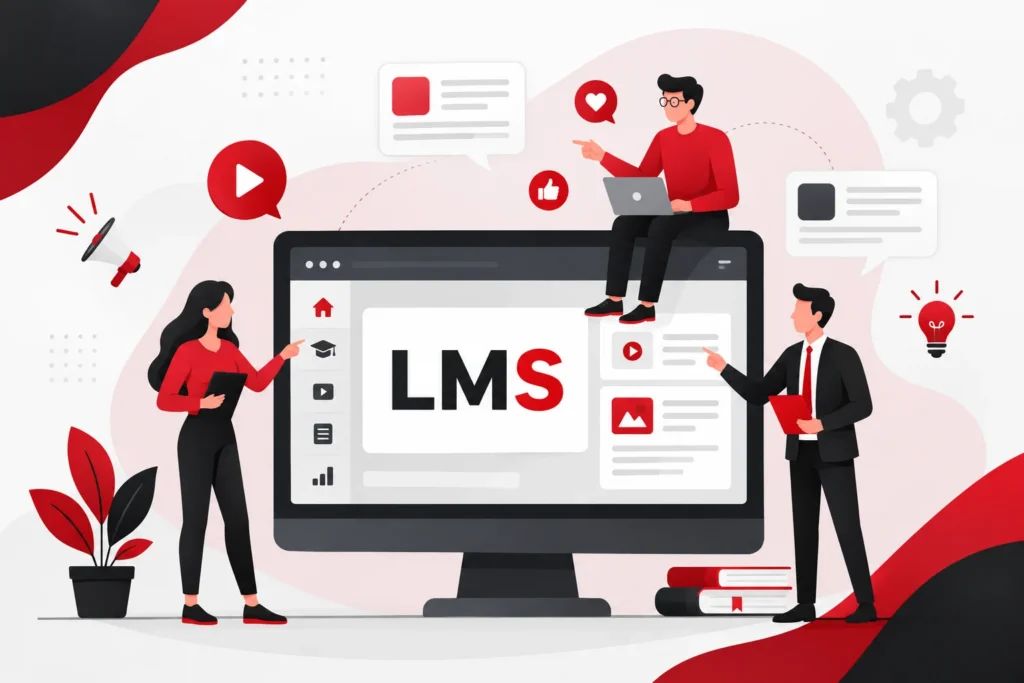
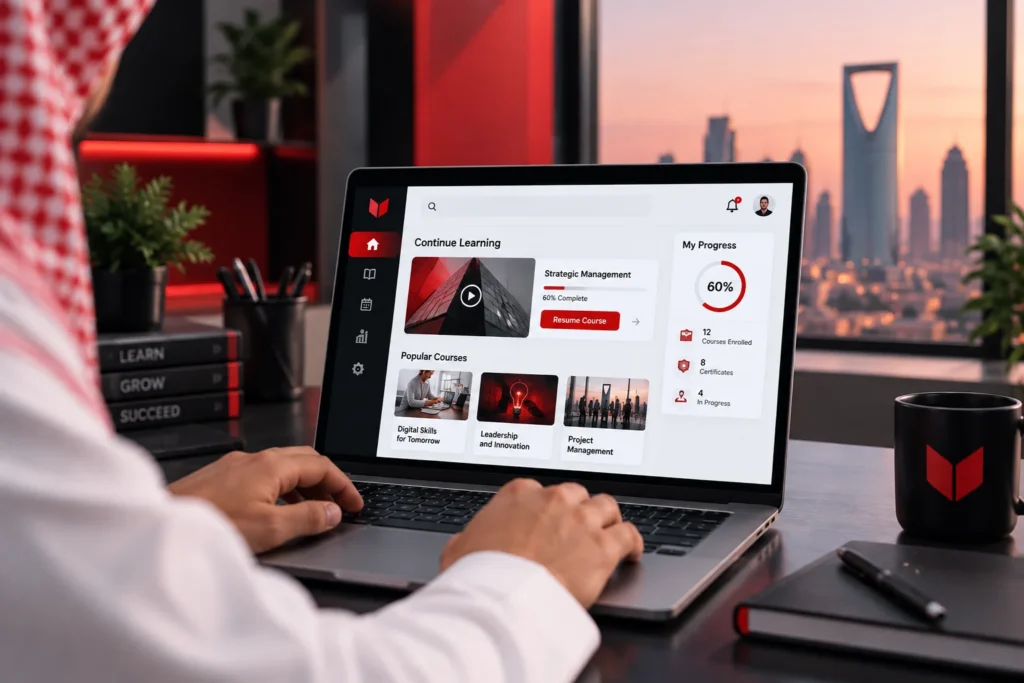
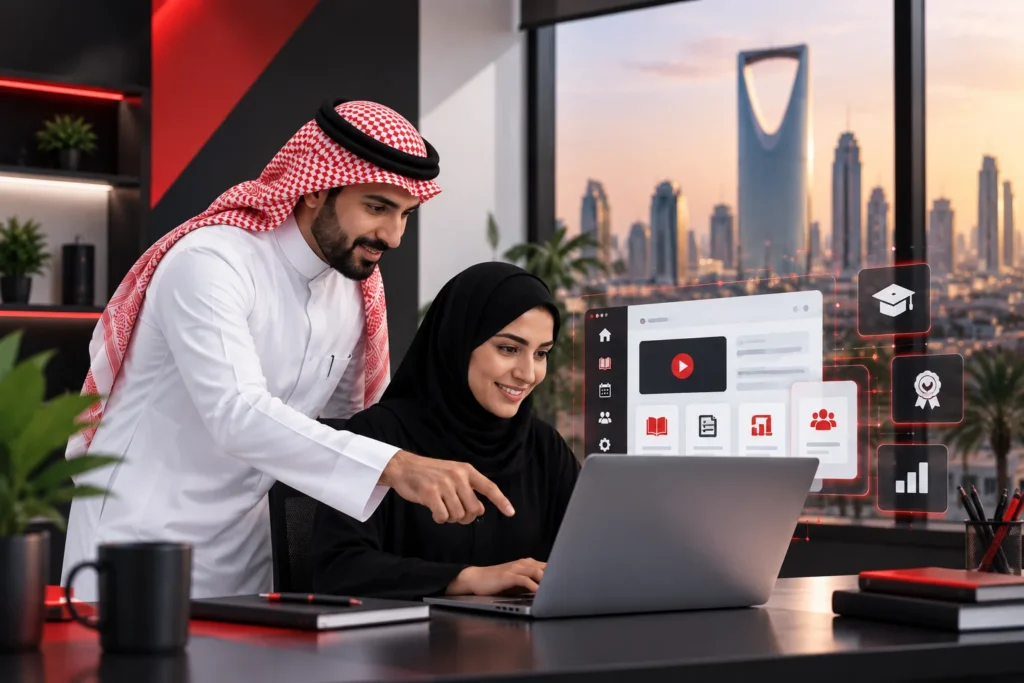
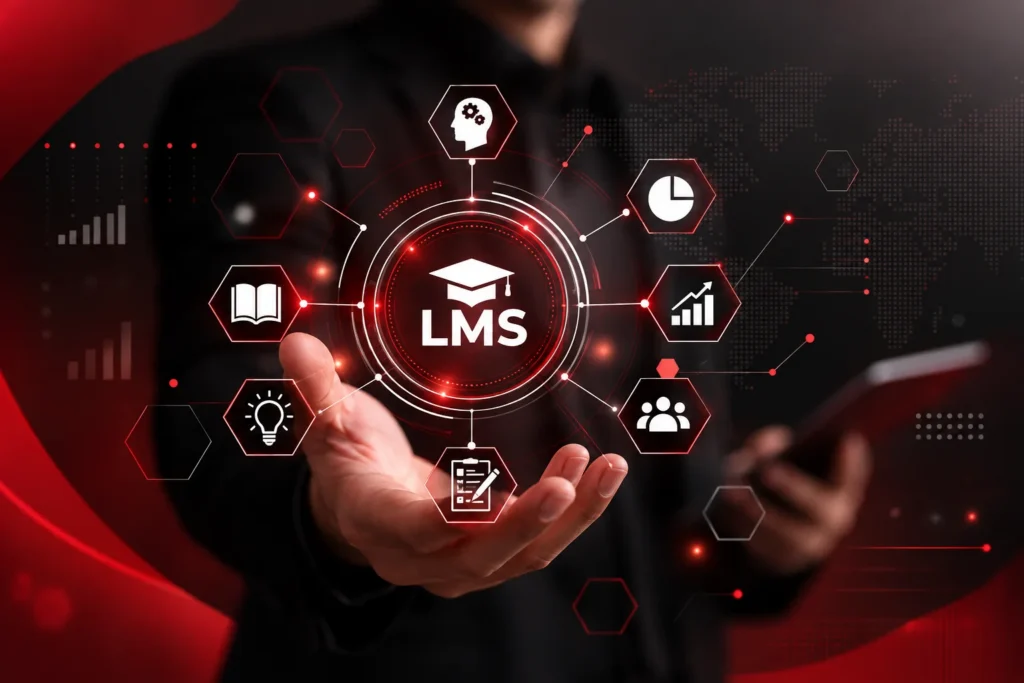
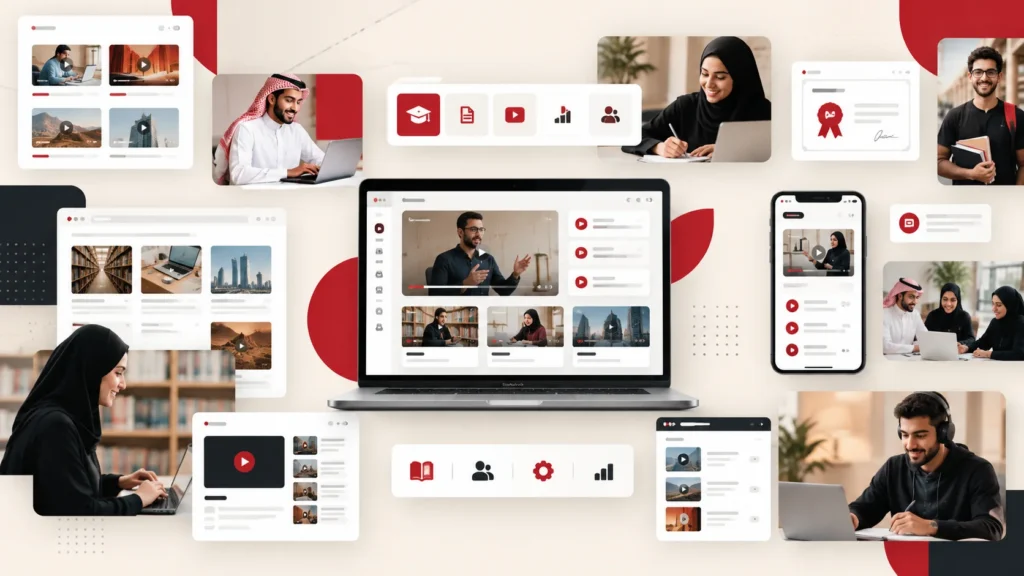
Make learning easier to access, manage and measure with an LMS built around the way your organisation actually works. StandardTouch is an LMS software company in Saudi Arabia for schools, universities, training centres, businesses and government organisations. We help you launch and run learning platforms that bring courses, learners, assessments, certificates and reporting into one system. The important part isn’t adding more software. It’s making sure the platform fits your courses, users and the people who administer it every day.
StandardTouch‘s learning management solutions in Saudi Arabia are built around your users, course content, administration process and reporting requirements.
You may need an employee training portal, academic platform, customer academy or commercial course website. We don’t treat those as the same project. The users, permissions, course structures and administration requirements can be very different.
Our LMS services in Saudi Arabia cover custom development, implementation, learning platforms, integrations, migration and ongoing support.
We can design an LMS around your processes, permissions and reporting requirements instead of asking you to reshape the organisation around the software. Custom development makes sense when important requirements can't be handled cleanly by a standard setup. It also involves more planning, so we recommend it only when the project calls for it.
When an existing LMS provides the right foundation, we can configure course structures, permissions, categories, enrolment rules and administration settings for launch. The small decisions matter. A platform can have the right features and still frustrate users if its structure makes everyday tasks difficult.
A corporate LMS can organise employee onboarding, compliance training and internal learning in one controlled platform. The setup can reflect your departments, roles, courses and reporting access
Schools, colleges and academies can organise course materials, assessments, progress tracking and administration within one learning platform. The structure should follow the institution's teaching and administrative model rather than forcing every department into the same workflow.
If courses are part of your business model, we can develop a portal for selling courses, managing payments and enrolment, and organising learning resources. The buying and learning experiences need to connect. Learners shouldn't complete payment and then struggle to find their course.
LMS integrations should solve a defined administration or learning requirement. We can review connections with your website, ERP, HR, CRM or reporting systems. Depending on what your organisation already uses, this may involve platforms such as SAP, Microsoft Dynamics 365, Salesforce, Odoo, Zoho or Power BI. The exact integration depends on system compatibility and available APIs. If two systems don't genuinely need to exchange information, connecting them can create technical work without improving the learning process.
When replacing an existing platform, we can review the users, courses and relevant data that may need to move. What can be transferred depends on the existing LMS, replacement platform and condition of the data. Migration should be planned before launch, not treated as a final upload task.
We can provide technical support, administration, updates and related services after launch. The arrangement depends on the platform and how much your own team wants to manage.
A Learning Management System in Saudi Arabia may need to account for Arabic and English users, RTL layouts, permissions, personal data handling and organisational cybersecurity requirements.
Arabic support goes beyond translated labels. Navigation, layouts and course content may need to work naturally from right to left, particularly when users move between Arabic and English experiences.
Where an LMS processes identifiable learner or employee information, organisations should review how that information is collected, accessed, stored and processed against applicable Saudi data protection requirements, including the Personal Data Protection Law (PDPL).
Cybersecurity and hosting requirements can differ by organisation, sector and platform architecture. These decisions are better addressed during planning than added after permissions, courses and integrations have already been built.
Tell us about your learners, courses and platform requirements. We’ll review what you need and help identify the right approach for your LMS project.
Our LMS services in Saudi Arabia cover custom development, implementation, learning platforms, integrations, migration and ongoing support. We don't assume custom development is automatically better. Building software you don't need only adds work and maintenance.
Configuration can be more practical when an established LMS already provides the foundation you need.
A custom LMS makes sense when important workflows can’t be handled cleanly by an existing platform.
Good learning management software in Saudi Arabia should make courses clear for learners and administration practical for the people running them.

Support tests, assignments, marking, attempts and feedback rules based on how your organisation needs to assess learners.

Track learner activity and completion through the LMS dashboard. Where required, certificates can be issued according to defined completion rules and supported verification options

Send relevant platform or email notifications to learners and administrators. Useful notifications have a purpose. Too many alerts simply create noise

Give authorised teams visibility into enrolment, participation and completion. The reports should reflect why you're using the LMS rather than producing data nobody needs.

Arabic and English requirements should be considered from the beginning. Language can affect RTL layouts, navigation, course organisation and content presentation, not simply the wording displayed on screen.

Organise lessons, documents, videos and other learning materials within a course structure that makes it clear what learners should complete next.

Configure appropriate access for learners, managers and administrators. Someone taking a course shouldn't have the same controls as the person managing it.

Enrolment can be managed through administrators, groups, rules or users themselves, depending on the LMS and course requirements.
The right LMS structure depends on who needs to learn, who manages the platform and how courses are delivered.
Support digital and blended learning with course materials, assessments, progression and administration structured around students, teachers and administrators.
Bring courses, instructors, learners, assessments and certificates into one system, giving administrators a clearer place to manage multiple courses and groups
Organise onboarding, internal training and compliance learning around departments, employee roles and reporting requirements
Provide learning resources for customers, partners, franchises or distributors with access rules designed for users outside your internal organisation
Manage learning for defined audiences with appropriate permissions and reporting instead of treating every learner as part of one unrestricted user group.
LMS implementation works best when users, courses, permissions and administration requirements are understood before development or configuration begins.

We review your learning goals, audiences, course model, administration, reporting, language and system requirements.

We define the platform structure, permissions, core features, timeline and what belongs in the initial launch.

We configure or develop the LMS, establish the course structure, apply agreed branding and handle approved system connections.

We support initial course setup, test key functions and train administrators. This is also where practical permission or workflow issues can be identified before launch.

We assist with launch and can continue with technical support, administration and other agreed services according to your operational needs.
StandardTouch has more than 18 years of experience and has worked with more than 750 clients. Our Saudi presence includes Riyadh, Jeddah, Al Khobar and Al Jubail.
We plan learning platforms around Saudi organisations and users, including language requirements and relevant local considerations. Those requirements should influence planning rather than being added to the interface later.
We don't assume every organisation needs the same setup. Your learning model, users, administration, language requirements and longer-term plans determine whether configuration or custom development makes more sense.
We connect your learning requirements with the technical work required to implement the platform instead of recommending software based on a feature list alone.
Learners, instructors, managers and administrators have different responsibilities. We plan permissions and administration around those differences and your requirements.
We consider how the structure will work as courses, learners and administration requirements grow without trying to build every possible feature on day one.
We can provide technical support and administrative assistance after launch as your requirements change.
LMS cost depends on whether you need an existing platform configured or a custom system developed. User numbers, course requirements, integrations, migration, language requirements and ongoing support also affect scope. We review these requirements before providing a project estimate rather than applying one price to every LMS.
The timeline depends on the platform, users, course content, additional features, integrations, migration and testing. A focused configuration normally involves less work than a custom learning platform with complex permissions and system connections. We provide a timeline after reviewing the project scope.
Yes. Arabic and English experiences can be implemented where supported by the selected LMS and project requirements. Arabic should be considered early because it can affect RTL layouts, navigation, course organisation and content presentation.
Potentially, yes. We can review APIs, requirements and compatibility with your existing systems. An integration should solve a defined requirement, such as synchronising users or sharing authorised reporting data, rather than connecting systems simply because an API is available.
We can review your current LMS, users, courses and relevant data before recommending a migration approach. What can be transferred depends on the source platform, replacement LMS and condition of the available data.
Hosting should reflect your organisation’s data, security, technical and applicable regulatory requirements. Where identifiable learner or employee information is processed, the hosting and data architecture should be reviewed against applicable Saudi requirements, including PDPL obligations.
Posted on Google![]()
Sharfuddin ShariffTrustindex verifies that the original source of the review is Google.
Posted on Google![]()
Wajhiuddin AnsariTrustindex verifies that the original source of the review is Google.
One of the best, one stop IT solution company! Most professional and motivated team.Posted on Google![]()
Hadiya NoorTrustindex verifies that the original source of the review is Google.
Posted on Google![]()
Yash ArafathTrustindex verifies that the original source of the review is Google.
Very professional... Must recommended for all online supportPosted on Google![]()
Jayapremnath MohanTrustindex verifies that the original source of the review is Google.
Excellent team!! Even post implementation also they are giving the very support!! Awesome team #StandardTouch....Posted on Google![]()
Aishwarya KulkarniTrustindex verifies that the original source of the review is Google.
Posted on Google![]()
afroz shehriyarTrustindex verifies that the original source of the review is Google.
Your LMS should reflect the people using it, the courses you’re delivering and the administration happening behind the scenes.
Tell us about your learners, courses and requirements. We’ll help you identify an LMS approach that brings learning into one platform for your organisation in Saudi Arabia.